
Reading Scripture in Not-Normal Times: Stay Steady in God's Alternative Power When Chaos Floods the Zone
Revisit stories of faith-filled outcasts and peaceful dissidents living by God's presence, purpose, and pace in fear-driven communities.

If you pay even casual attention to the news these days, you know that before you’ve had time to absorb one alarming headline, another arrives. Each time I turn on the television or open my phone, I brace myself for the next awful thing.
When emergencies and atrocities pile up one right after the other, it’s hard to keep our footing. And those in power know how to use that chaos to bypass accountability and advance agendas that would never go forward in normal times. It’s a caricature of the tech world’s mantra for innovation, move fast and break things. Urgency doesn’t just run our institutions. Over time, it begins to govern our inner lives. The constant churn strains our nervous systems, leaving us anxious, exhausted, or numb.
There is a term for this feeling so many of us are carrying. Political analysts call it, flooding the zone, a deliberate strategy of overwhelming the public with conflict, controversy, and outrageousness. The idea isn’t so much to persuade us but to disorient or desensitize us. There are many tools in this strategy: a relentless onslaught of unexpected announcements and initiatives, deliberate shock and breaking of norms, cruelty as spectacle, unapologetic lies, contradiction after contradiction, and a pace so relentless that those of us watching wind up unable to think or act with clarity.
Researcher for the GoodAttention Project, Zsolt Kapelner, writes that the deepest harm isn’t just misinformation, but the shutdown of our capacity to pay attention to the things that matter most. Healthy public life depends on our ability to notice issues, share perspectives, come to a consensus, and act together for the common good. Flooding the zone weakens that capacity. When attention is constantly hijacked, truly urgent matters often go unaddressed and power moves forward unchecked.
Thank God, Scripture moves differently.
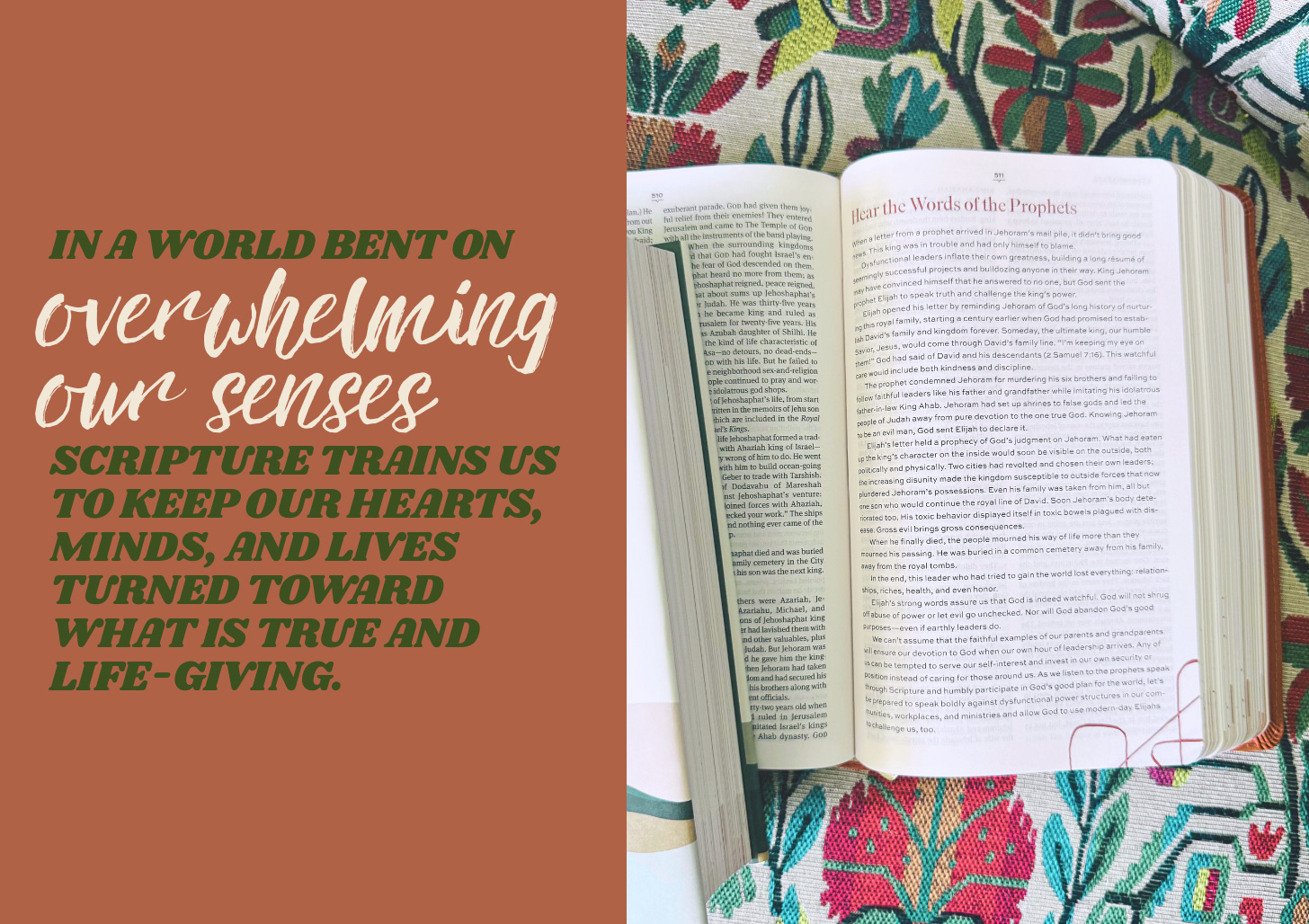
Written largely under the weight of empire, exile, occupation, and other dysfunctional situations, the pages of Scripture introduce us to people who refuse to internalize the attitudes of domineering leaders. Rather than cowering under aggression, they hold their God-given dignity and orient their lives toward the presence, purpose, and pace of God. In a world bent on overwhelming our senses, Scripture trains us to keep our hearts, minds, and lives turned toward what is true and life-giving.
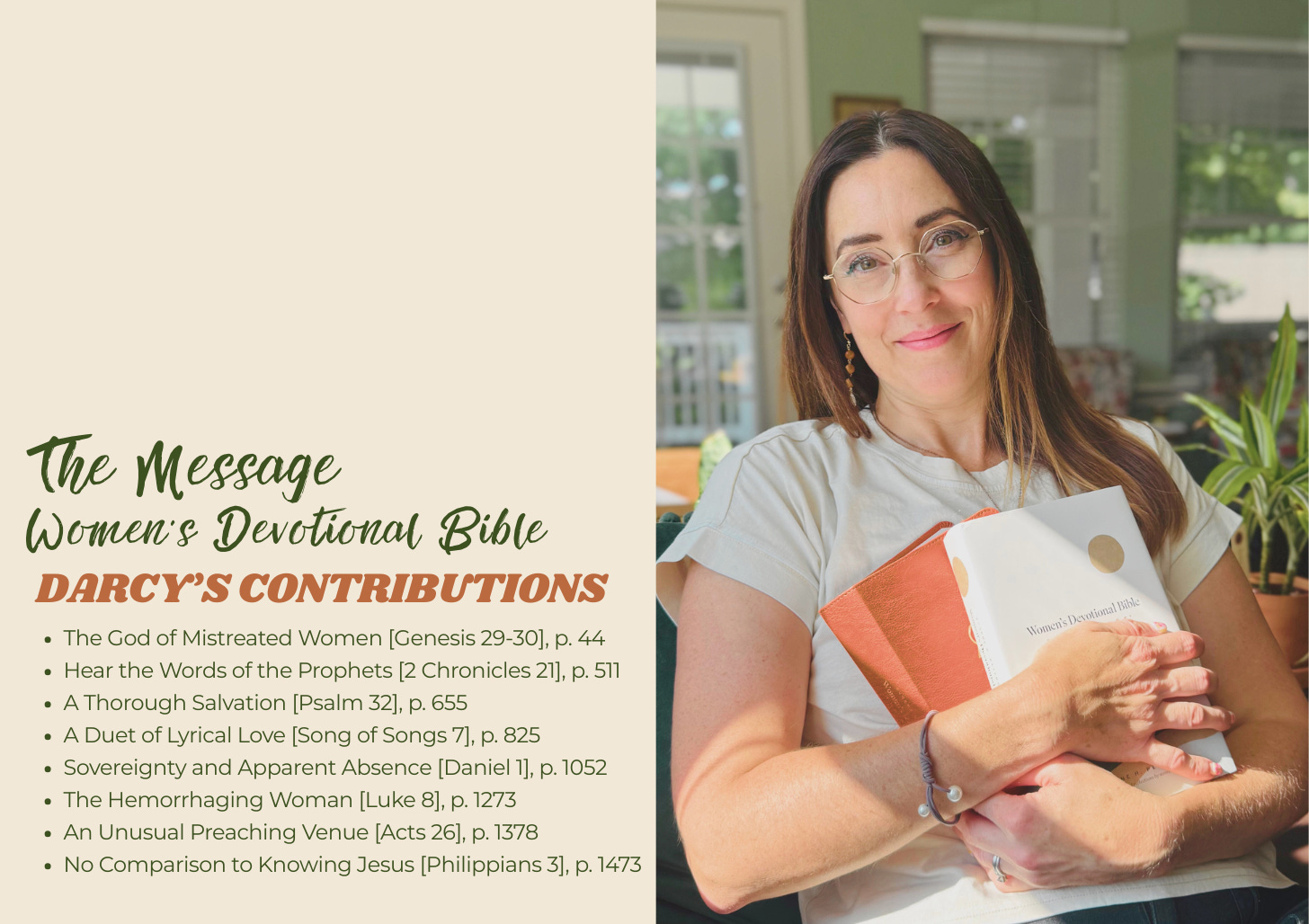
I discovered these themes afresh while contributing eight pieces to The Message Women’s Devotional Bible, a collaborative project that took five years to complete. Under the editorial leadership of Catherine McNiel and Olivia Eldredge, I worked alongside more than eighty women of different ages, ethnicities, locations, vocations, and denominations. Collectively, we wrote 320 devotions and 52 character studies engaging passages familiar or obscure, comforting or difficult.
In each text I explored, faith-filled witnesses embodied God’s alternative power in communities being dominated by fear, hierarchy, and control. Their stories show us how to remain clear-eyed and ready to respond when the system around us tries to corrupt our values or render us powerless.
The God of Mistreated Women: Trapped in a jealous and competitive family system, treated like a commodity, and forced to measure her own desirability against her sister’s, Leah became an object of ridicule. Though she seemed like a side character in someone else’s story, God noticed her, answered her longing for dignity by making her the mother of half the tribes of Israel, and helped her find language for both her grief and her joy, even as the system around her remained deeply dysfunctional. (p. 44)
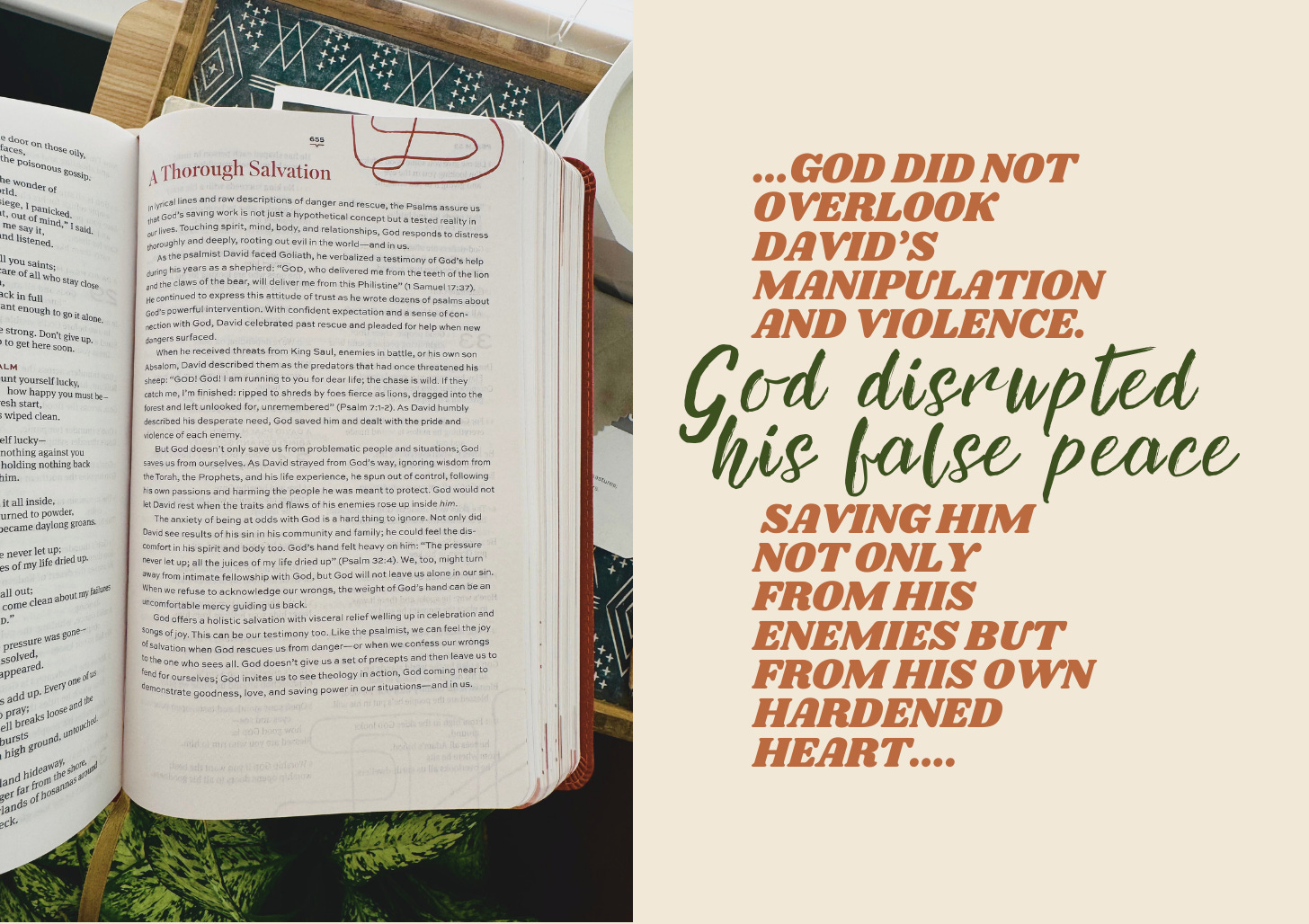
A Thorough Salvation: Some in the Christian nationalist movement have used David’s misconduct to excuse abusive leaders. But a close reading of Scripture shows that God did not overlook David’s manipulation and violence. God disrupted his false peace, saving him not only from his enemies but from his own hardened heart, calling him out of entitlement and abuse of power and back into a way of humility, authenticity, and love. (p. 655)
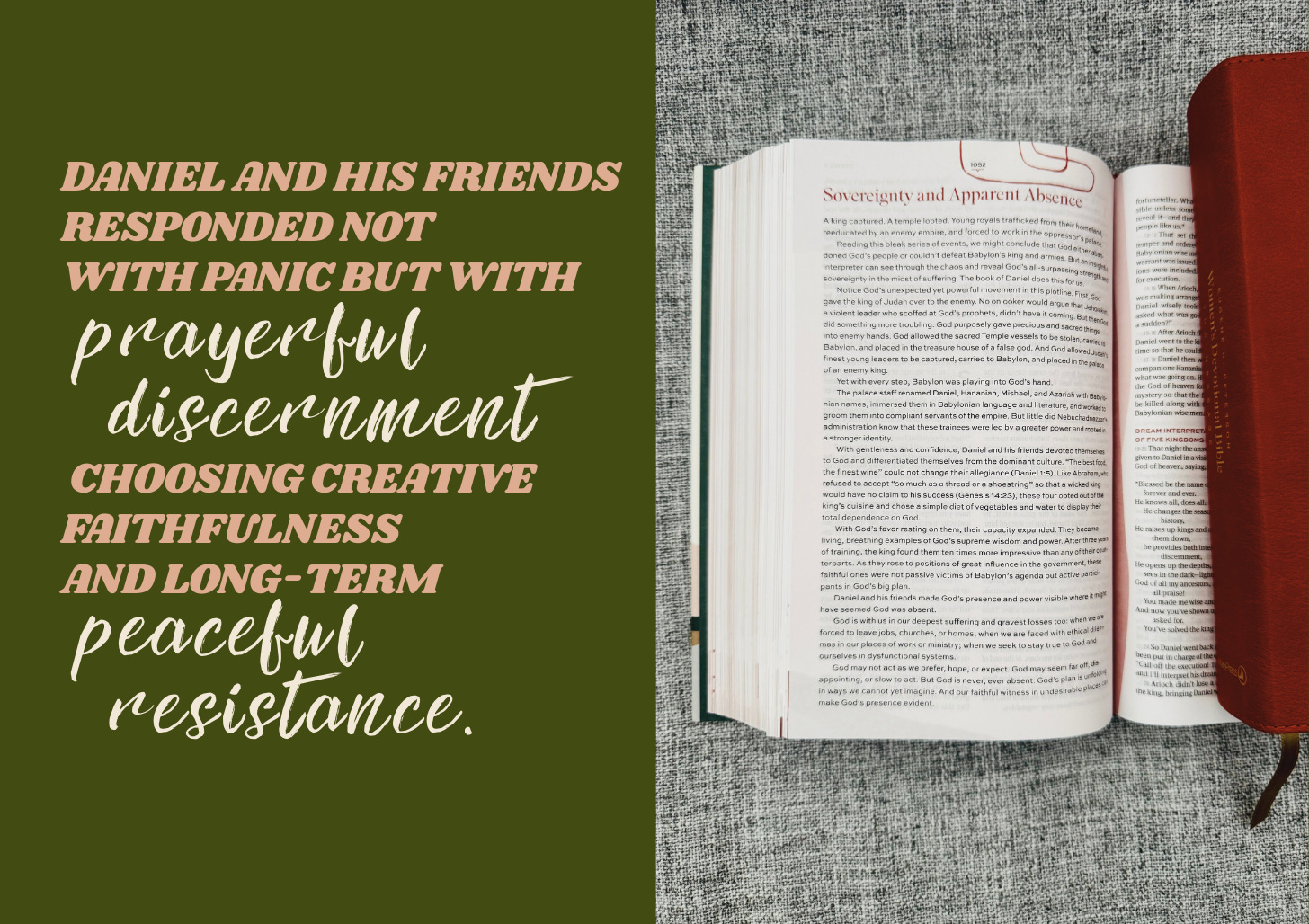
Sovereignty and Apparent Absence: Carried into Babylon and given new names in an attempt to erase their cultural identities, Daniel and his friends responded not with panic but with prayerful discernment, choosing creative faithfulness and long-term peaceful resistance. Their story exposes how worldly power demands assimilation to maintain control, while God preserves distinctiveness and invites the oppressed to become active participants in God’s unfolding purposes. (p. 1052)
The Hemorrhaging Woman: When a quiet woman inadvertently interrupted an emergency response caravan, Jesus refused to rush past her. He gave her his full attention, healed her from years of bleeding and social isolation, and publicly restored her dignity by calling her, “Daughter.” Worldly power relies on shame and exclusion, favoring one category of person above another. God’s alternative way bridges the divide between the outcast and the community, and reshapes the values of those watching. (p. 1273)
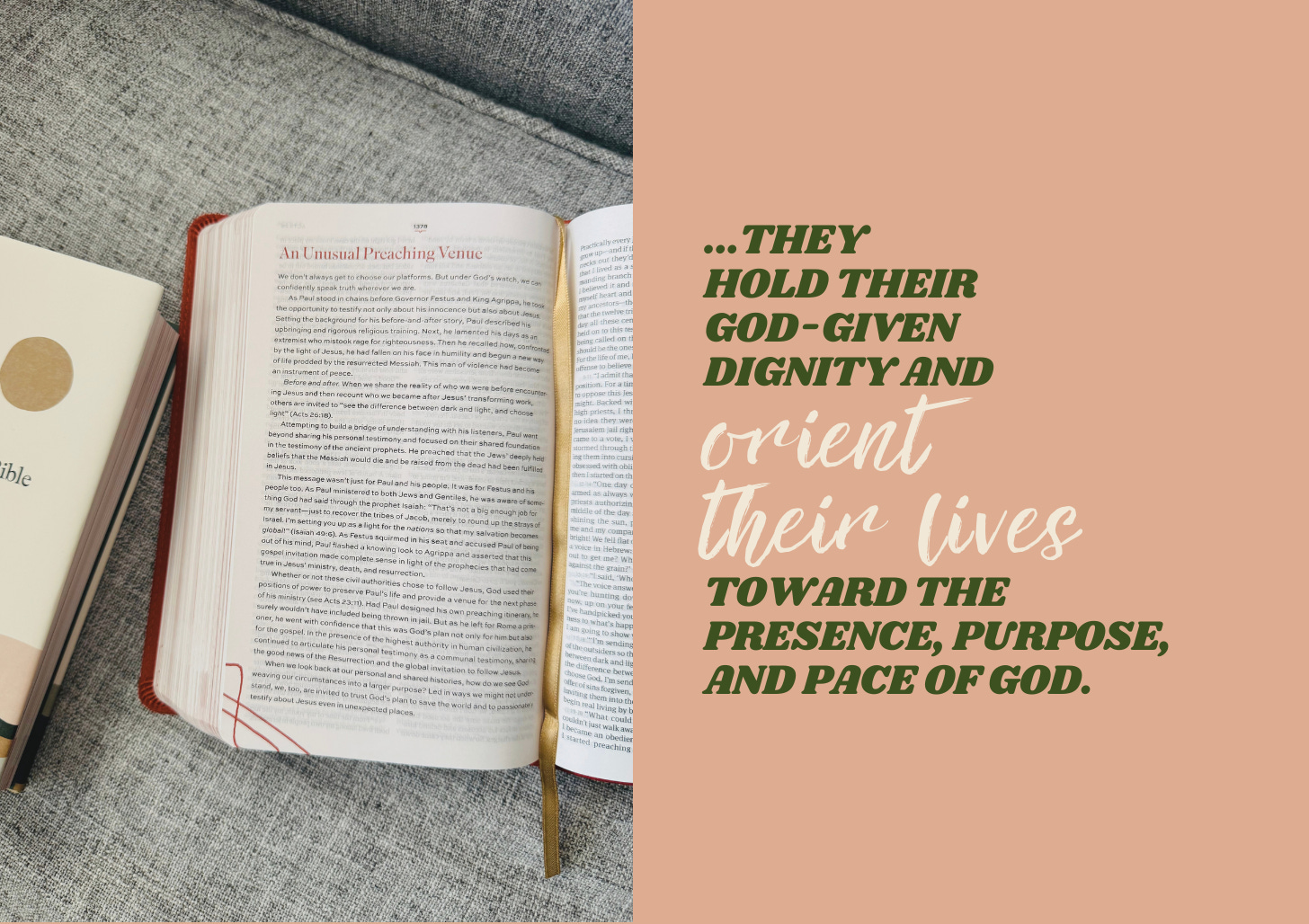
An Unusual Preaching Venue: In chains before a governor and king, Paul used the witness stand as a place of creative courage, telling the story of how God had transformed him from a man of violence into an instrument of peace. His calm truth-telling stands in sharp contrast with worldly power’s reliance on intimidation and spectacle. Paul refused their script, maintaining his moral agency and dignity even when stripped of his physical freedom. (p. 1378)
Scripture trains us to live out of sync with worldly powers and live by the Spirit. Like these faith-filled outcasts and peaceful dissidents, years of slow attention, prayer, and grounding in the larger story of God and God’s people will form in us a steady wisdom that shows up even in moments of immense pressure.
While we deal with leaders who move fast and break things, I prefer the counter-ethic: move slowly and fix things. Centering ourselves in God’s life-giving power, we can refuse to let political chaos become our way of life. We can refuse to let violence change our values. Like Desmond Dawes, the medic in Hacksaw Ridge, we can say, “While others are taking life, I’m going to be saving it. With the world so set on tearing itself apart, it doesn’t seem like such a bad thing to me to want to put a little bit of it back together.”
“While others are taking life, I’m going to be saving it. With the world so set on tearing itself apart, it doesn’t seem like such a bad thing to me to want to put a little bit of it back together.”
-Desmond Dawes, Hacksaw Ridge
When those in power flood the zone with spectacle or brutality, it can leave us paralyzed, wondering if prayer or peaceful resistance make any real difference. But whether or not the system changes for the better, we can change for the better. We do this by returning again and again to the practices that have always strengthened God’s people. The Message translator Eugene Peterson described his way of life as “a long obedience in the same direction,” a devotion not driven by panic or outcomes, but by staying in tune with the loving God who has good in mind for us and the world.
This is how we live through not-normal times. When the rulers of the world “steal and kill and destroy” (John 10:10 MSG), we follow another way. Even as we process shock and grief over lives lost to brutality, we can keep our wits about us. We can stay awake to injustice and join with others who refuse to look away. We can turn again and again to God’s power and find courage to share truth in the face of intimidation. And we can create safe places of rest and repair in a culture bent on chaos.
Across Scripture, modern history, and our daily headlines, worldly power manipulates to get compliance. God’s power moves with love. Where fear atrophies the imagination, love opens it. Where fear gets pushy, love arrives passionate and peaceful. Where fear dehumanizes, love restores dignity.
God’s alternative way is not something vague or sentimental. It takes on flesh in real people and real situations. In an enemy palace, in a roadside interruption, in a court room, God empowers people who persist in “love [that] banishes fear” (1 John 4:18 MSG).
Which story did you most need to hear today?

Such an important piece of encouragement. The references to The Message Devotional are helpful too 🙂 So many thought provoking observations of Biblical narratives in there! "God’s alternative way is not something vague or sentimental. It takes on flesh in real people and real situations. In an enemy palace, in a roadside interruption, in a court room, God empowers people who persist in “love [that] banishes fear” (1 John 4:18 MSG)." Amen.
Thanks for this! A much needed perspective right now. 💗 I just recently bought the The Message Women’s Devotional Bible - how delightful to find out you’re a contributor! 🥰